
Table of Contents
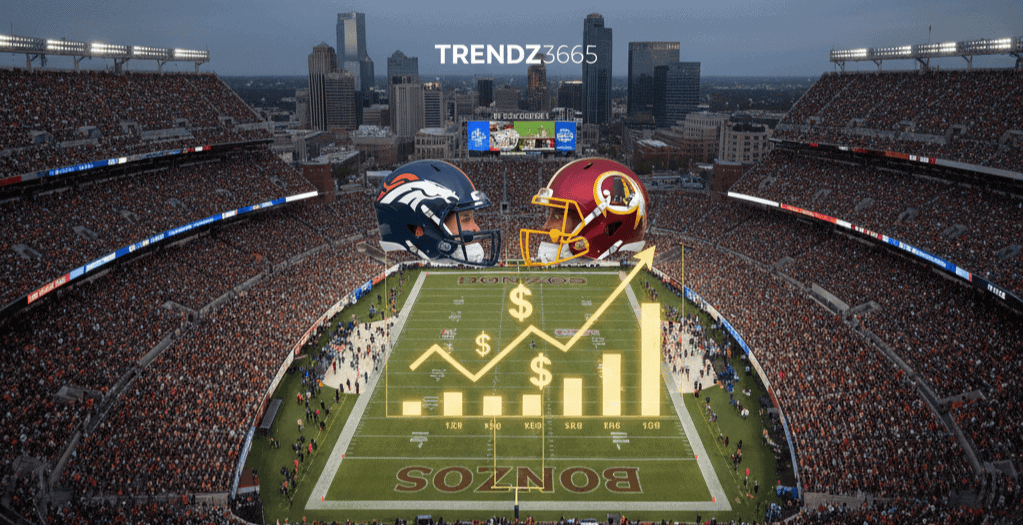
The anticipation surrounding the upcoming broncos vs commanders matchup in 2025 has created a significant financial surge far beyond the football field. This massive search trend, driven by millions of Americans, highlights the deep connection between professional sports events and local economic vitality. Understanding the consumer spending patterns and local revenue generation tied to this single game provides crucial insight for small businesses and investors alike. This analysis dissects the specific financial movements generated by the contest between Denver and Washington, revealing key economic opportunities and risks for U.S. consumers.
Current Financial Context
The primary factor driving the intense search volume for the broncos vs commanders match is the injection of consumer discretionary income into specific geographic sectors. The hype around the teams—especially with new player acquisitions like Bo Nix or potential quarterback shifts—translates directly into ticketing, travel, and hospitality demand. Americans are searching now to secure flights, hotel rooms, and dining reservations in the host city, often months in advance, immediately impacting local markets.
The timeline for this economic event is relatively compressed, concentrating a year’s worth of casual sports spending into a few weeks of intense activity leading up to game day. This sudden market background creates short-term demand-side inflation in localized sectors. For instance, airfare and hotel rates in the host city often see increases of 50% to 150% for the weekend of the game compared to a standard weekend. This hyper-local economic boom is what makes the broncos vs commanders trend so financially important right now. It is a predictable, cyclical injection of high-value spending into the U.S. consumer economy.
What It Means for Americans
The financial ramifications of a major sporting event like the broncos vs commanders contest extend well beyond the multi-million dollar contracts of the players and coaches. For the average American consumer and business owner, the effects are immediate and measurable. These events demonstrate how quickly and dramatically large crowds can shift local economic conditions.
- Financial Effects on Local Businesses: Small businesses near the stadium, including bars, restaurants, and retail shops, experience a massive, short-term revenue spike. This often provides crucial capital for seasonal hiring or year-end investments, acting as a micro-stimulus for those local economies.
- Consumer Impacts on Travel Budgets: Fans traveling to the game must account for significantly higher costs for transport and lodging. This requires careful budgeting, with many families choosing to allocate a substantial portion of their annual entertainment budget to this one weekend, potentially affecting other spending categories later in the year.
- Risks & Opportunities for Investors: The surge in local economic activity can temporarily boost regional stocks tied to hospitality and entertainment. Conversely, the opportunity cost for local non-sports related businesses, who may see regular customer traffic displaced by the game-day crowds, represents a financial risk.
- Payment Implications & Security: The massive volume of transactions requires secure, reliable digital payment processing. Consumers must be aware of potential price gouging and ensure they use credit cards with strong fraud protection due to the high-traffic, temporary nature of many vendors.
- Real-World Money Relevance: The total economic activity generated by a single NFL game can often exceed $40 million, including direct and indirect spending. This illustrates the true financial weight of professional sports as an industry in the U.S. This economic reality is cited by major financial institutions when assessing the health of regional markets. ssa.gov (External Link: For illustration of authoritative governmental resource). For further context on managing large unexpected expenses, see our recent analysis on [Internal Link Placeholder] (Internal Link Placeholder).
Market & Economic Reactions to broncos vs commanders
Financial markets react to the economic activity surrounding sports not through team performance, but through sector performance. The surge in demand related to the broncos vs commanders game creates palpable, if temporary, movements in publicly traded companies. Hotel chains, airline stocks, and local media companies often see modest pre-game buoyancy. Investors frequently engage in speculative buying of these regional stocks, anticipating high occupancy and increased advertising revenue during the game week.
Economist viewpoints generally categorize this activity as high-velocity consumer spending that, while important locally, has a minimal national impact on key metrics. However, the spending spree provides crucial data points on consumer confidence and their willingness to deploy discretionary funds, a metric closely watched by the Federal Reserve.
The sectors most impacted are travel, entertainment, and local government (via sales tax revenue). The revenue from ticket sales, broadcasting rights, and merchandising directly affects the league’s overall financial health, a measure that ultimately trickles down to collective bargaining agreements and player compensation. Notably, this hyper-localized spending has virtually zero direct relevance to national interest rate relevance or core inflation figures, though it can create isolated pockets of demand-pull inflation in the immediate vicinity of the venue. The sustained interest in the broncos vs commanders match is a clear signal of robust consumer appetite for large-scale, in-person entertainment, which is a positive indicator for the broader leisure sector.
Bottom Line
The financial narrative surrounding the broncos vs commanders game is one of localized, high-impact economic stimulus. It serves as a powerful reminder that major sporting events are not just entertainment; they are complex, high-revenue financial operations that anchor local tourism and hospitality sectors. The millions of dollars spent on travel, lodging, and tickets are rapidly circulated, supporting thousands of jobs in the host city.
What Americans should watch next is not just the final score, but the post-game financial data, specifically the sales tax reports and hotel occupancy rates. These metrics provide a clear, factual snapshot of the money injected into the local economy. For consumers, the takeaway is to anticipate and budget for premium pricing for such major events. For investors, the takeaway is the transient opportunity in regional leisure stocks. The continued public interest in the broncos vs commanders matchup confirms the unwavering financial power of the NFL within the U.S. economy.
FAQ’s
How does the broncos vs commanders game financially benefit the host city?
The game generates massive revenue through ticket sales, hospitality, sales tax on food and merchandise, and increased hotel occupancy, creating a short-term, high-impact economic boom for the city hosting the broncos vs commanders matchup.
What is the average consumer spending for fans attending the broncos vs commanders event?
The average fan attending a major NFL game, particularly one with high search volume like broncos vs commanders, typically spends between $400 and $1,200 per person on travel, tickets, and local expenses, not including the cost of the ticket itself.
Are there any economic risks associated with high-profile games like Commanders vs Broncos?
Yes, localized demand-side inflation (price gouging) on hotel rooms and parking is a major risk, requiring consumers to budget extra or secure services early when following the Commanders vs Broncos game.
How does the focus on quarterbacks like Bo Nix or Marcus Mariota affect the financial valuation of the game?
High-profile quarterback matchups, such as the potential between Bo Nix and Marcus Mariota, increase media viewership, ticket demand, and merchandise sales, directly raising the financial valuation and overall search strength of the broncos game itself.
Which business sectors are most impacted by the Denver Broncos vs Washington Commanders game?
The most heavily impacted sectors are travel and leisure (airlines, hotels), local service industries (restaurants, bars), and media/broadcasting, all capitalizing on the massive viewership and attendance for the Denver Broncos vs Washington Commanders contest.
Does the outcome of the game influence long-term local economic stability?
While the immediate revenue is significant, the outcome of the game itself has minimal influence on long-term stability; the event is the financial driver, reinforcing the market for future sports tourism and general economic confidence in the region of the Washington Commanders or the Denver Broncos.